External intervention外部介入
Nonprofit teams contribute theory, starter resources, and initial facilitation.公益团队提供理论、启动资源与最初的引导支持。
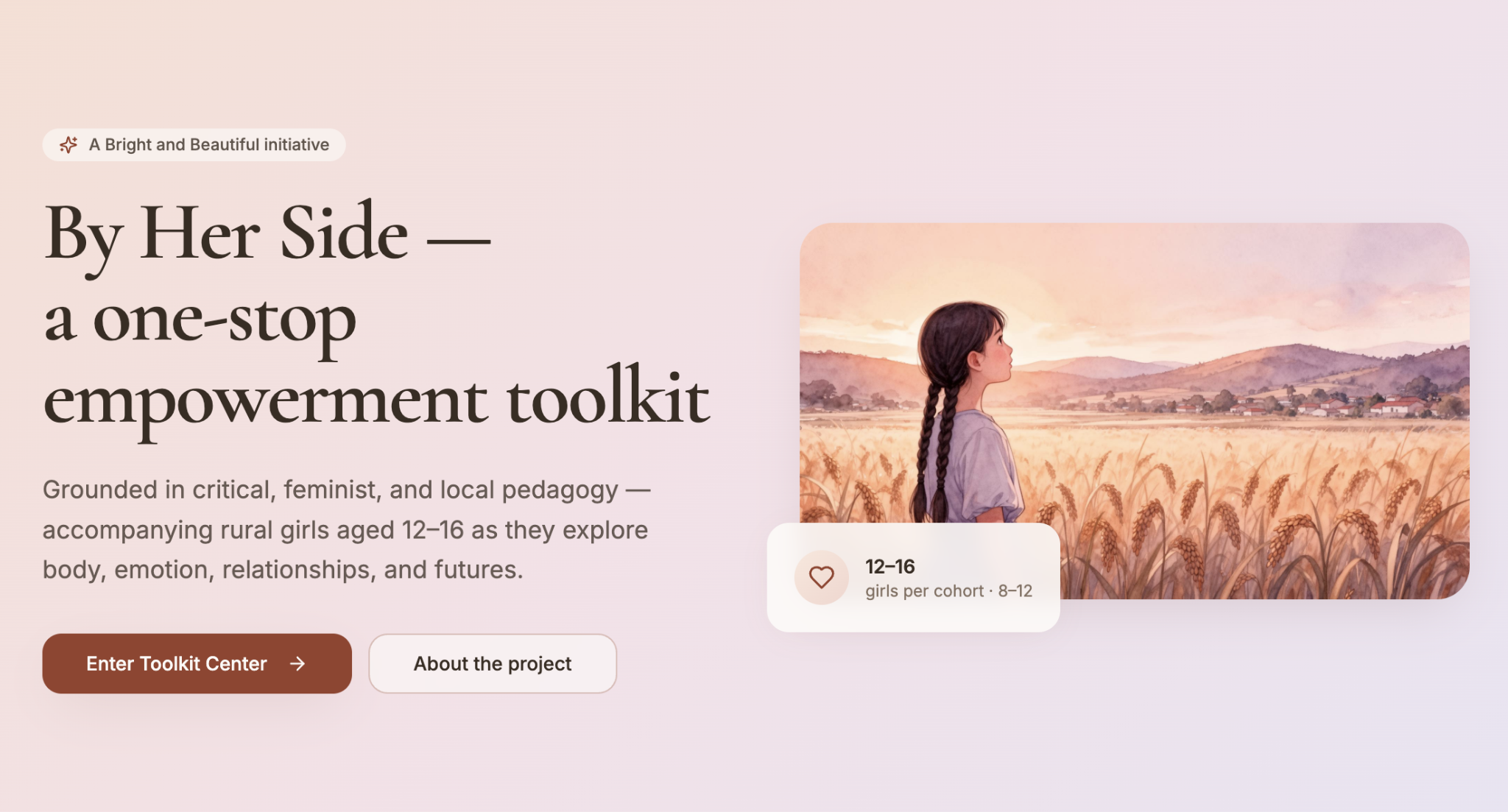
A community-rooted empowerment model that moves beyond short-term volunteering by centering local mentors and reusable curriculum infrastructure.以本地导师与可复用课程基础设施为核心,将短期支教转化为社区内生、长期持续的陪伴体系。
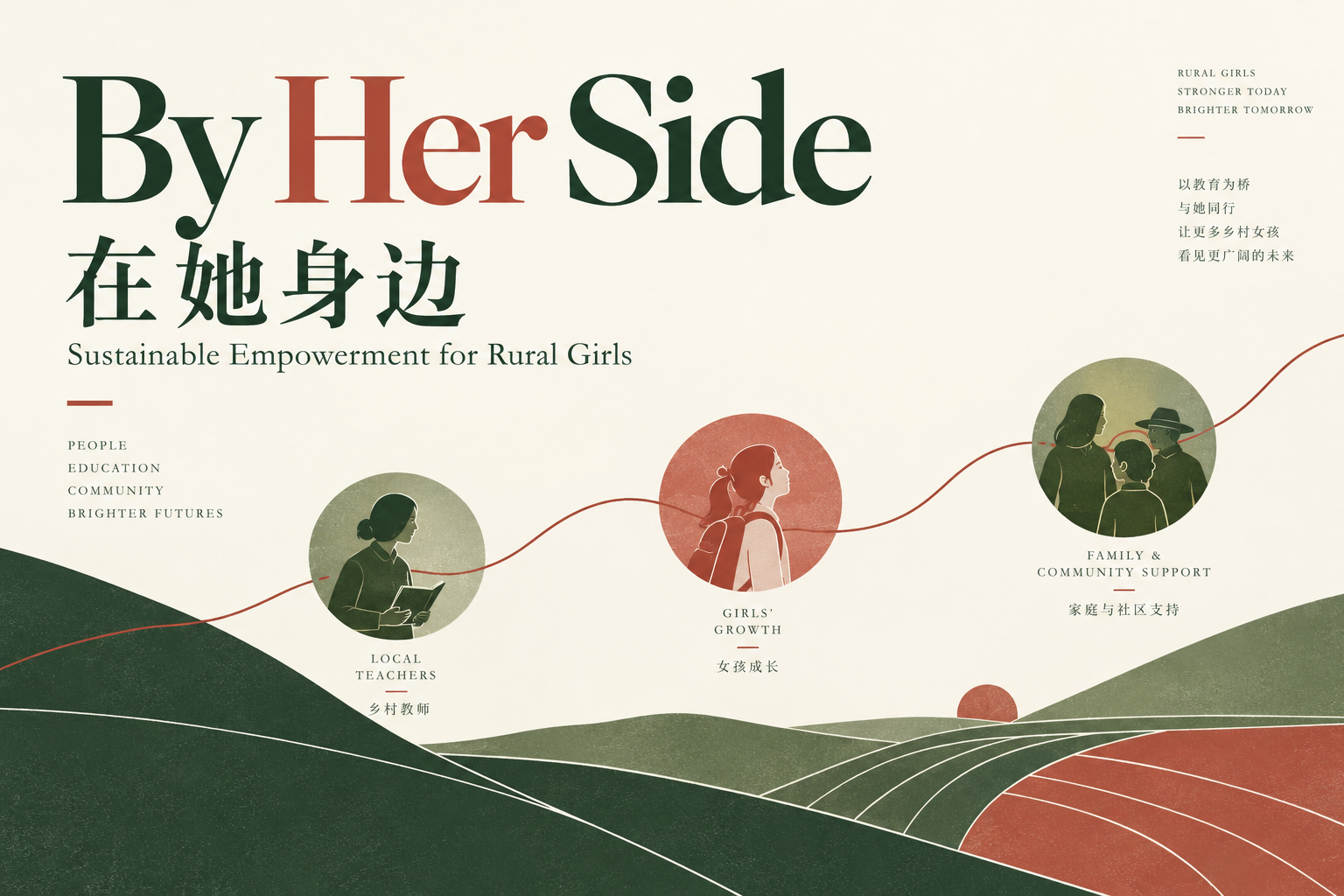
The project began with a contradiction I observed in short-term rural education programs: a week of activities can open new possibilities for adolescent girls, yet the relationships, pedagogical support, and institutional capacity often disappear with the visiting team. 这个项目始于我在乡村短期教育项目中看到的一组矛盾:一周的活动可以短暂打开女孩对身体、关系与未来的想象,但随着外来团队离开,关系、教学支持与制度能力也常常一起消失。
The design question therefore shifted from “What should volunteers teach?” to “Who can continue the work, and what infrastructure helps them adapt it locally?” 因此,设计问题不再是“志愿者应该教什么”,而是“谁能继续这项工作,以及怎样的基础设施能够支持他们在地化地持续推进”。
How can short-term intervention become community-rooted accompaniment?如何让短期介入,转化为扎根社区的长期陪伴?
The project treats sustainability as a pedagogical and relational problem, not only an operational one.这里的“可持续”不仅是运营问题,也是教学关系与社区主体性的问题。
Nonprofit teams contribute theory, starter resources, and initial facilitation.公益团队提供理论、启动资源与最初的引导支持。
Teachers examine local gender structures and adapt methods through reflection and peer learning.教师通过反思与同伴学习理解本地性别结构,并调整教学方法。
Girls receive ongoing support around body, emotion, relationships, and future possibilities.女孩围绕身体、情绪、关系与未来持续获得支持。
Families, schools, local organizations, and returning youth build a support network that outlasts the project cycle.家庭、学校、本地组织与返乡青年共同形成超越项目周期的支持网络。
The framework combines critical pedagogy, feminist pedagogy, curriculum theory, and place-based education. The aim is not to deliver a fixed model from the outside, but to offer adaptable tools through which local educators can name problems, test practices, and build their own responses. 理论框架整合了批判性教育、女性主义教育、课程理论与地方本位教育。目标不是从外部投放一套固定答案,而是提供可调整的工具,让本地教育者能够共同命名问题、尝试实践,并形成自己的回应。
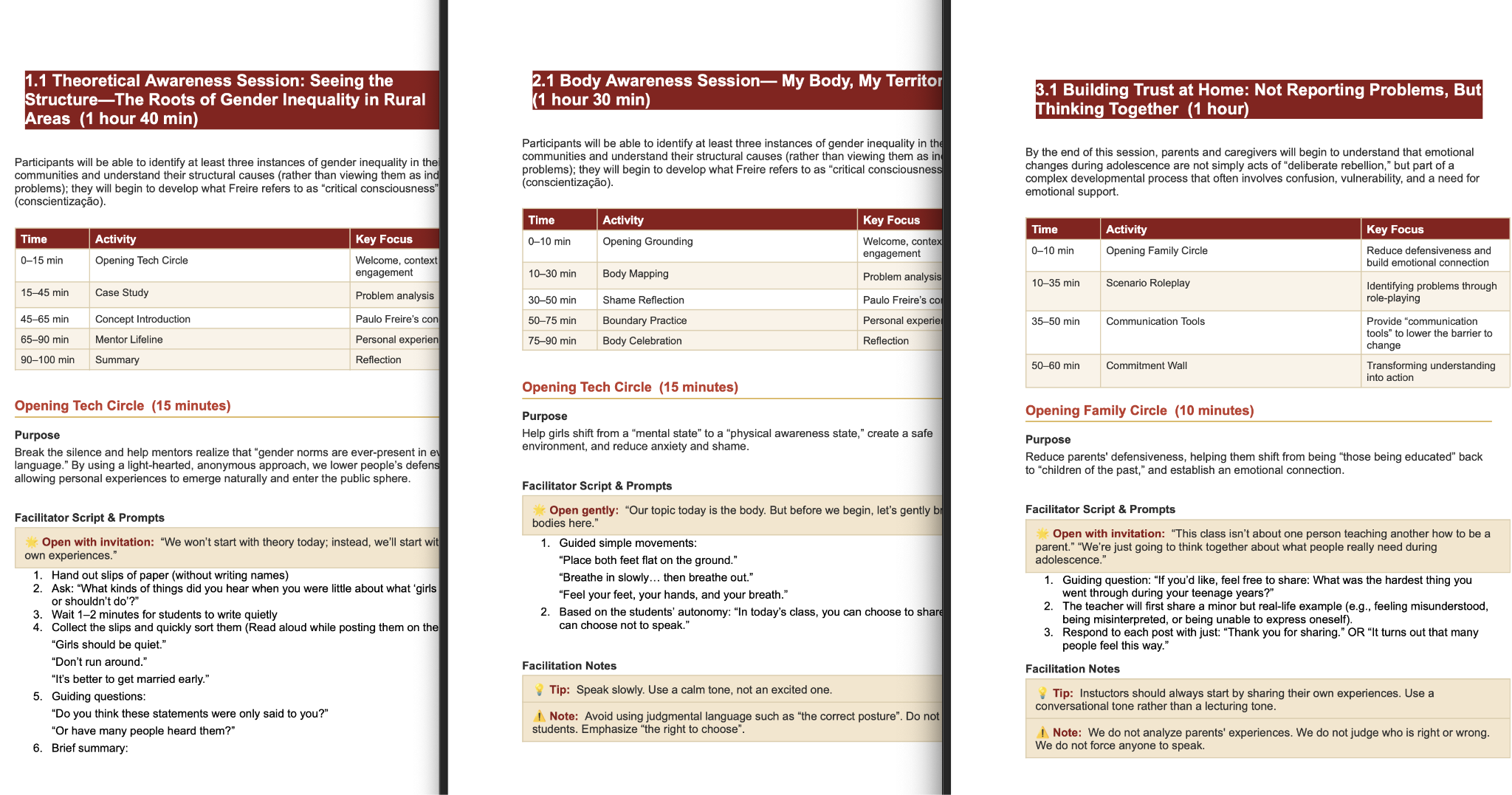
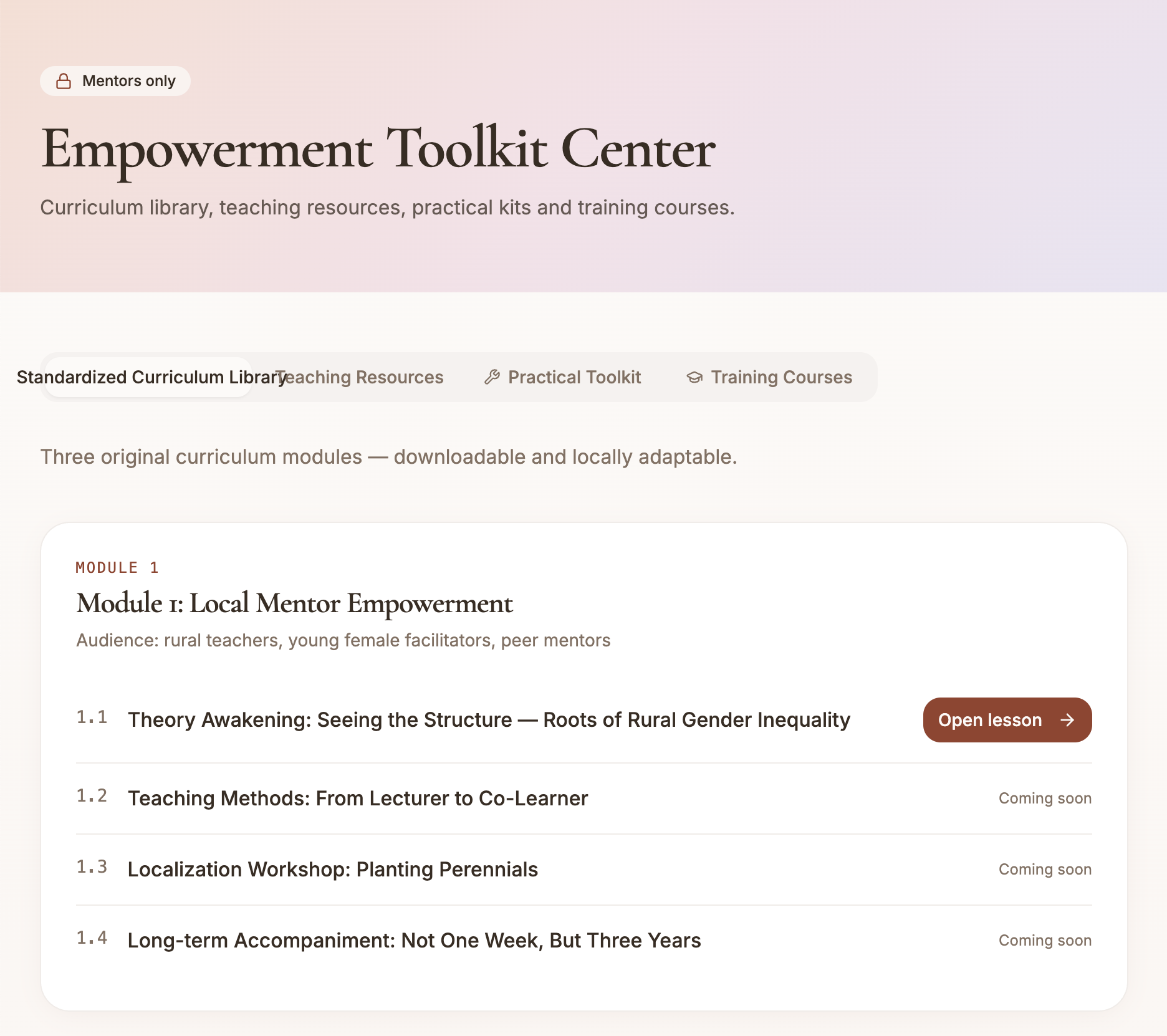
Supports teachers in recognizing structural gender inequality, shifting from lecturer to co-learner, localizing activities, and planning long-term accompaniment.帮助教师识别结构性性别不平等,从知识传授者转向共同学习者,并练习课程在地化与长期陪伴规划。
Frames body education through autonomy, emotion, boundaries, and social meaning rather than biological instruction alone.不把身体教育局限于生理知识,而是连接自主性、情绪、边界与社会意义。
Invites caregivers to begin from their own adolescence, compare punitive and supportive responses, and commit to small, realistic changes.邀请家长从自己的青春期经验出发,对比惩罚式与支持式回应,并承诺一个可实践的小改变。
Adaptable lesson plans, instructional videos, activity guides, and localized templates.提供可调整的教案、教学视频、活动指南与本地化模板。
Peer case discussion, collaborative lesson planning, reflective practice, and expert learning.支持案例讨论、协同备课、反思实践与专家学习。
Private, class- or village-based spaces for questions about health, emotion, and learning.以班级或村落为单位的私密空间,支持身体、情绪与学习问题的持续交流。
Maps schools, women’s federations, nonprofits, and returning youth to make local resources visible and reusable.连接学校、妇联、公益组织与返乡青年,让本地资源可见、可调用、可积累。
The most important shift was realizing that sustainability is not primarily a question of adding more content. It is a question of who holds knowledge, who can adapt it, and who remains present after external attention moves elsewhere. 这个项目最重要的转变,是意识到“可持续”并不主要意味着加入更多内容,而是要重新回答:谁掌握知识,谁有权调整它,以及外界注意力离开后,谁仍然留在关系中。
If developed further, the next step should be participatory co-design with rural teachers and girls, followed by small-scale implementation and revision. Without that process, the current prototype remains a theoretically grounded proposal rather than a validated solution. 如果继续推进,下一步应与乡村教师和女孩开展参与式共创,再通过小规模实施进行修订。缺少这一过程时,当前原型仍是一份有理论依据的方案,而不是经过验证的解决方案。